Friday, March 22, 2013

Movie costumes - The Tourist

A few nights ago, I watched Angelina Jolie and Johnny Depp in The Tourist (2010), mostly because it was set in Venice. I didn't care for much for the film but was intrigued by the costumes.
I was undecided about whether they worked well or not but they were interesting. They seemed a bit try hard and a little old for Jolie but I was curious about them and they did look luxurious.

The costume designer was Colleen Atwood who has had a number of Academy Awards for films like Chicago and Alice in Wonderland (by Tim Burton).

A dress inspired by authentic Irene (1930s costume designer) costume and a modern day addition of the mocha wrap


A draped silk evening dress was an original design


This outfit was tailored from a vintage find


An original Charles James dress - my favorite


A white evening jacket tailored by Saville Row
The accessories - jewelry, gloves and shoes (mostly Ferragamo) gives the film and the costumes a very expensive look. What do you think?

Sunday, February 17, 2013

Colette Clover capri pants


Making capri pants, and in particular this pattern, has been on my "To Do" list for a while. I've never made pants before and these looked so simple and cute. I thought "why not?" - if it works out I can make it in all sorts of colours. Well, not so easy....

First, the fabric: French navy cotton with 2% spandex. Affordable fabric in case things do not go well. Originally I was going to line these pants - what was I thinking?? I gave this idea up quickly. 

I made a toile (terrible initial fit) and attended a class to adjust the pattern for a better fit, had to make major modifications, made a second toile, modified this and then finally cut the fashion fabric. All good? Nope. The garment sewed together well but the fit was awful - no photos necessary - it looked like ill fitting jodhpurs. The unfinished garment is lying in pieces in the sewing room. 


I'm not even going to pretend to know what went wrong. My only guesses are...

- they are pants
- they are fitted stretchy pants
- the toile was made in non-stretch muslin, maybe it should have been made in fabric with the same degree of stretch
- I "self fitted" the second toile - not ideal

I think it's salvageable - I really do but I'll get help. If I can get the fit right, I think they could become a good staple garment. 

Not sure I'm too keen about sewing pants again though. What about you?


Monday, February 11, 2013

Have you taken a blogging break?

I did. It coincided with a holiday and then it drifted along for longer than I had planned. Oops.

Let's face it, it takes time, care and thought to create a interesting or useful post. And then there's the accompanying photos to consider......

This blog started as a chronicle of my return to sewing with a splash of vintage patterns talk as I discovered them.

Recently, as I've had less time to sew, I've had less to say about my projects. So while these projects slowly re-emerge when time permits and as I work out the direction I'm going (things change), I will to focus on all things vintage (patterns).

What do you think about blogging breaks? Do you take them? If so why? Do your blogs change focus as your interests change?

Sunday, September 30, 2012

Fabric shopping in Italy

A little while ago I was lucky enough to spend two fabulous weeks in Italy. High on my "To Do" list (crazy I know) was fabric shopping. I had been warned that the fabric was expensive but I was determined to buy Italian fabric in Italy and so I did.

First stop:
Casa Del Tessuto, Rome
www.casadeltessuto.com

Street entrance
This place is enormous. There are bolts of fabric two stories high with everything from fine silks and wools to home ware fabrics. A word of advice, have a pretty good idea of what you want before you get there otherwise it's completely overwhelming. And be prepared to ask for what you need because it impossible to see the fabric without help. Also be prepared for the prices especially for silk and wool.

Next stop:
Casa dei Tessuti, Florence
www.casadeitessuti.com
view as you walk in the front door

While Casa Del Tessuto feels like a warehouse, this lovely store is a step back in time with lovely old fashioned service. The service is very personalised which can also be a little intimidating if you're just browsing but the fabric are gorgeous. They have the most wonderful selection of lace and linen. Once again be prepared for the prices, they are much higher than I'm use to.


Last stop:
small fabric store, Milan (sorry, can't recall details - not helpful, I know)

This was a stumble upon small fabric store in the fabulously upmarket shopping district near the Duomo. Again, the prices were up there so I immediately gravitated towards the remnants on sale and snagged a delightful piece of Italian made silk blend fabric.

If any one else has some tips, I'd love to hear about them for future trips.

Thursday, June 14, 2012

Inspiration Board: 1930s/40s glamour loungewear

1940s loungewear

1940s loungewear by sewindigo featuring pink slippers

A word about housecoats (also known as dust coats) - not too glamorous sounding are they? But don't confuse them with the everyday "dressing gown" we know now. In the past, dressing gowns were  associated with male clothing. Housecoats were a feminine item, popular in the 1940s. They were used to put over day clothes to protect them when doing chores in the home, hence the long sleeves and longer hemlines.

Housecoats were usually made of a lightweight fabric or sometimes quilted for warmth and would fasten down the front with either a zipper or buttons.  The red housecoat in this board is by Mainboucher from 1950s (in the Met Museum). Hardly a frumpy style "dressing gown"! The McCall housecoat pattern is from 1939.

Overtime the purpose of the housecoat changed and women starting wearing them in the evening when hosting guests. The term housecoat is rarely used now has merged with the dressing gown into a unisex item worn at home. 

Wednesday, June 6, 2012

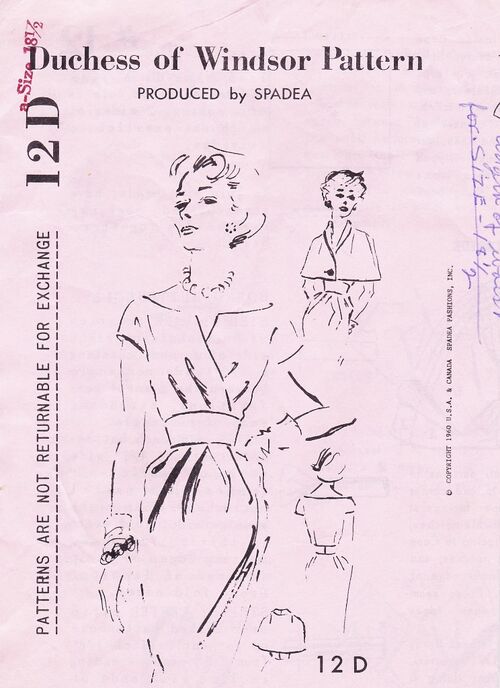
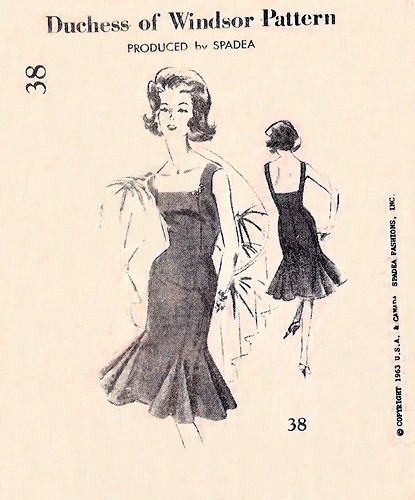
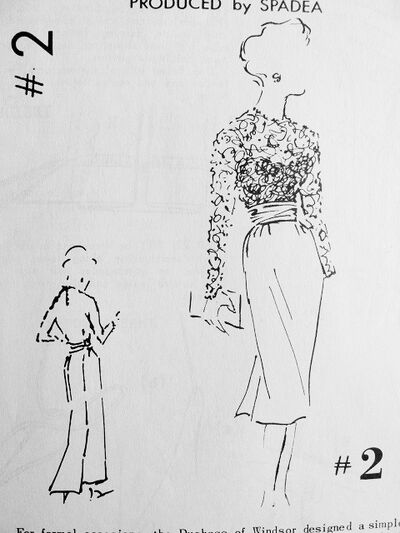
The Duchess of Windsor as a designer

While the controversial  Duchess of Windsor had a reputation as a woman of style, I never knew she was a pattern designer. Did you?


From the late 1950s and well into the 60s, the Duchess of Windsor worked with the Spadea pattern company to design patterns. Spadea patterns have a reputation of being some of the best pattern produced in the 20th century and worked with a number of American designers and celebrities over the years. If you're interested, you can find an excellent overview of the history and design of Spadea patterns here.

Here's some examples of the Duchess of Windsor patterns and I think if you look back through some of her photographs they definitely reflect here sense of fashion.

one of mine from 1960

1963


Sunday, May 27, 2012

Fitting a commercial pattern: Pants

Recently I  attended my second class on fitting and modifying a commercial pattern. Last time it was a dress, this time pants.

I have wanted to make the Colette Clover pants for sometime - so cute and versatile but I was intimidated mainly because they are PANTS and they are fitted! Plus I've never made a pair of pants before.

Source

So best to get help from professionals - I'm glad I did. So, I completed a muslin (in calico) based on the sizing on the chart I thought. Not good - too small around the hips and way too low at the back. Also there's something strange going on in the crotch area of the pattern and it was a bit full at the front.

Source - not my pants btw
So quite a few modifications needed and a second muslin will have to be done. Having read other blogs on the Clover pants, fitting this pattern (or maybe all pants) can be an issue but when people get it right, they seemed to be happy with them.

My suggestions:-
- definitely make a test garment (ideally in a similar stretch fabric)
- Colette as a series of blogs for her Clover Sewalong which includes fabric select and fitting - definitely worth a look

Despite making the muslin in calico (I couldn't find any cheap fabric with the right stretch), I will be using fabric with stretch for comfort. So I'll be checking the fit again in the fashion fabric. I want to include stretchable interlining in the pants to help minimise the stretch fabric growing as I wear it (I hope). And I'll be lining them for luxury and comfort. This could be overkill but I'll see how we go.

I've found a thick French blue cotton with some stretch which will be excellent for my first attempt. Fingers crossed.....

Monday, May 21, 2012

Finished garment: Vintage red sheath dress

You may remember I finished a couple of courses recently:-
- Susan's Khaljie's online The Couture Dress course
- Fitting a commercial pattern course

I decided to apply what I had learned to a vintage sheath dress pattern I'd collected some time ago. It ticked all the right boxes for us curvy girls:-


  • the bodice and skirt darts allowed for figure flattering fitting
  • the skirt was not quite pencil straight so was hip/thigh skimming
  • the 2 side slits allowed for ease of movement
  • there was a nice V neck feature at the back of the dress
  • there were some subtle tucks at the waist making the stomach area more flattering
  • I left the overskirt option off but having seen the dress, it could be quite cute in the right fabric
So to the fabric and construction:-

-source-
  • Fashion fabric: Red/black digital print cotton with a subtle sateen finish. Originally I was thinking silk but I chose a lower cost option so I could test the outcome and also wear it more often. I also wanted a slightly retro look in the fabric
  • Interlining: lightweight cotton (not my best choice as it did not have great body and was difficult to handle but then I did want a washable option)
  • Lining: Red poly acetate - cost related choice again but it was a pain to handle (especially during cutting and marking)
Not the greatest photos but I promise to post photos of me wearing the dress...
Front - boat neck fitted bodice

Side view
Side view - hand inserted side zip

Back view - V neckline

Here's what I learned:-
  • After the muslin fitting, I spent ages adjusting the muslin (darts etc) and reassembling the toile to make sure I had the fit correct. It was worth it. It was so fantastic to have a garment that fitted regardless of size or shape. It make a huge difference
  • I followed Susan's assembly techniques pretty much to the letter. Hand basting, interlining, inserting the lining by hand - the whole nine yards. Again, it was so worth it - the dress is an absolute dream to wear! The interlining and lining makes the garment feel more "substantial", "luxurious" and comfortable to wear.
  • I enjoyed the handsewing! Not so much the thread tracing but inserting the lining and zip by hand was easier than I thought and you get more control. Even prick stitching the lining so it didn't roll past the fashion fabric was really satisfying to do. 
  • I will absolutely use this muslin pattern again. I could use it to adjust the front neckline for variety. Because the shape is so classic - it lends itself to variation in fabric and some alterations eg. sleeves.
  • I learned lots of patience and I can still hear my other half say "is it worth it?" The answer is "yes, absolutely!".
  • I've resolved to make fewer garment (not than I'm a prolific sewer anyway) but make them better. I'm aiming for a couple of garments a season. 
How do you feel about the garments you make? Which ones do you enjoy wearing often or make again?

Related Posts Plugin for WordPress, Blogger...